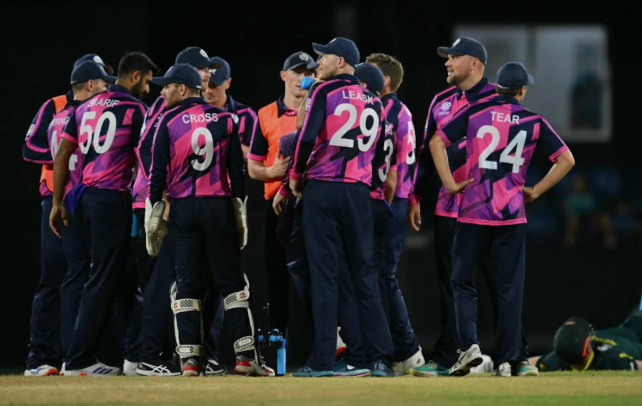
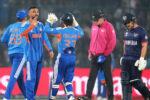
The rivalry between the Scotland national cricket team and the United Arab Emirates national cricket team has steadily grown into one of the most intriguing contests in Associate cricket. What began as occasional ICC qualifier meetings has now evolved into a tightly contested battle shaped by shifting momentum, tactical evolution, and high-pressure performances. Both teams have spent years fighting for recognition on the global stage, and their encounters often reflect that struggle. From early unpredictable results to modern last-over finishes, this rivalry has become a test of nerve, adaptability, and consistency. Fans now expect closely fought games where individual brilliance and smart captaincy decide outcomes.
Head-to-Head Summary
Format
Total Matches
Scotland Wins
UAE Wins
Tied / No Result
ODI (One Day Internationals)
16
11
5
0
T20I (T20 Internationals)
6
4
2
0
Overall Combined
22
15
7
0
ICC Team Rankings
Team
ODI Rank
ODI Points / Rating
T20I Rank
T20I Rating
Scotland
14th
1,071
15th
179
United Arab Emirates
19th
357
18th
174
Recent Matches
Date
Format
Venue
Winner
Margin of Victory
May 14, 2025
ODI
Utrecht, Netherlands
Scotland
Won by 8 wickets
May 08, 2025
ODI
Amsterdam, Netherlands
UAE
Won by 97 runs
May 04, 2025
ODI
Amsterdam, Netherlands
Scotland
Won by 3 wickets
March 14, 2024
T20I
Dubai, UAE
Scotland
Won by 32 runs
March 13, 2024
T20I
Dubai, UAE
Scotland
Won by 9 runs
March 11, 2024
T20I
Dubai, UAE
UAE
Won by 8 wickets
Most Memorable Matches
Match & Year
Significance / Narrative
Key Performers
Outcome
CWC Qualifier Final (2014)
Secured Scotland’s championship title in the tournament.
Preston Mommsen (139)
Scotland won by 41 runs
Tri-Nation Series (2018)
A high-scoring thriller where UAE successfully chased down 300 runs.
Rameez Shahzad (100)
UAE won by 4 wickets
T20 World Cup Qualifier (2019)
A high-stakes knockout playoff game that ensured T20 World Cup qualification.
George Munsey (65)
Scotland won by 90 runs
CWC League 2 (2025)
A tight, low-scoring thriller dominated by high-class bowling.
Brandon McMullen (50 and 3/48)
Scotland won by 8 wickets
Key Player Analysis
Player
Team
Role
Key Head-to-Head Stats
Impact Against Opponent
Richie Berrington
SCO
Batter
196 runs, Highest: 127
Anchors the middle-order; acts as a stabilizing presence.
Muhammad Waseem
UAE
Opener
211 head-to-head runs
Dangerous power-hitter capable of taking away the early powerplay.
George Munsey
SCO
Opener
209 runs, 1 head-to-head MOM
Explodes at the top of the order; particularly destructive in T20Is.
Mark Watt
SCO
Spinner
17 head-to-head wickets
Restricts run flow in the middle overs with highly defensive spin.
Brandon McMullen
SCO
All-Rounder
50 runs and 3 wickets
Provides critical balance with his medium-fast pace and top-order batting.
Junaid Siddique
UAE
Fast Bowler
8 head-to-head wickets
Spearheads the UAE pace attack; relies heavily on early swing.
Early Rivalry Formation and First Competitive Clashes
The early meetings between the Scotland national cricket team and the United Arab Emirates national cricket team set the foundation of a competitive Associate cricket rivalry. Both sides were still developing their identity in international cricket, often meeting in ICC qualifiers and regional tournaments. Scotland relied heavily on disciplined seam bowling and structured batting, while UAE focused on spin depth and aggressive middle order hitting. These early matches were closely fought, with momentum shifting frequently across innings. Conditions in neutral venues often played a huge role, testing adaptability. The rivalry was not yet intense but showed signs of future competitiveness. Fans began noticing how evenly matched both teams were, especially in pressure chases and low scoring encounters where one partnership often decided the result.
Season
Match Type
Winner
Key Performance
Margin
2014
ICC Qualifier
Scotland
Top order partnership control
4 wickets
2015
ODI Series
UAE
Spin bowling dominance
18 runs
2016
T20 Qualifier
Scotland
Death bowling execution
6 runs
2017
ICC Tournament
UAE
Middle order recovery
3 wickets
Head to Head Growth and Rising Competitive Balance
As the rivalry matured, both Scotland national cricket team and United Arab Emirates national cricket team began to understand each other’s strengths more deeply. Matches became tighter, with margins shrinking significantly. Scotland improved their white ball aggression, especially in powerplays, while UAE enhanced their pace attack to complement their spin-heavy strategy. ICC events played a major role in increasing stakes, as qualification spots were often on the line. Players on both sides started delivering consistent performances under pressure, turning matches into tactical battles rather than one-sided contests. The head to head record reflected this balance, with neither side maintaining long winning streaks. Fans from both nations began treating this matchup as a crucial fixture in Associate cricket calendars.
Season
Format
Winner
Key Moment
Margin
2018
ODI
Scotland
Chase acceleration phase
5 wickets
2019
T20
UAE
Powerplay bowling spell
12 runs
2020
ODI
Scotland
Lower order finishing strength
3 wickets
2021
T20 Qualifier
UAE
Tactical batting rotation
7 runs
ICC Qualifiers Pressure and High Stakes Encounters
The rivalry reached a new level of intensity during ICC qualifying tournaments where both the Scotland national cricket team and the United Arab Emirates national cricket team fought for World Cup and T20 World Cup spots. Every run and wicket carried massive importance, turning matches into high pressure contests. Scotland often leaned on experienced all rounders to stabilize innings, while UAE depended on sharp spin spells in middle overs to control scoring. Mistakes were costly, and small partnerships frequently decided outcomes. These matches also highlighted emotional intensity, with players visibly reacting to pressure moments. Tactical planning became more detailed, including matchup based bowling changes and aggressive field placements during death overs. The rivalry gained global attention during these qualifiers.
Season
Tournament
Winner
Star Performer
Margin
2022
WC Qualifier
Scotland
All round consistency
4 runs
2023
T20 Qualifier
UAE
Spin control spell
6 wickets
2024
ODI Qualifier
Scotland
Opening partnership
5 wickets
2025
ICC Playoff
UAE
Death overs batting
2 runs
Tactical Evolution and Strategic Adjustments Over Time
Over time, both Scotland national cricket team and the United Arab Emirates national cricket team adapted their strategies to counter each other effectively. Scotland began focusing on flexible batting orders and aggressive intent in the first ten overs, while UAE improved their bowling variations, especially slower balls and spin combinations. Field placements became more data driven, with both teams analyzing opponent weaknesses closely. The tactical rivalry extended into captaincy decisions, where bold choices often changed match momentum. Adaptability became the key factor, especially in changing pitch conditions across venues in Asia and Europe. This phase of rivalry showcased not just skill but also cricket intelligence, as both sides constantly evolved to gain psychological and strategic advantage.
Season
Strategy Focus
Winner
Tactical Edge
Result Type
2022
Powerplay attack
Scotland
Fast scoring start
Close win
2023
Spin control
UAE
Middle overs choke
Defensive win
2024
Batting depth
Scotland
Lower order impact
Chase win
2025
Death overs planning
UAE
Final over execution
Narrow win
Modern Rivalry Phase and Current Competitive Landscape
In the modern phase, the rivalry between Scotland national cricket team and United Arab Emirates national cricket team has become more refined and data driven. Both teams now enter matches with detailed analytics, focusing on matchup advantages and phase based strategies. Scotland often emphasizes explosive batting starts followed by controlled middle overs, while UAE builds innings carefully before accelerating late. The standings between them remain closely balanced, reflecting how evenly matched they are in Associate cricket. Recent encounters have been decided in final overs, showing the razor thin gap between victory and defeat. This phase also highlights emerging players stepping up under pressure, shaping the future of this rivalry in global tournaments.
Season
Format
Winner
Key Player Impact
Match Intensity
2024
ODI
Scotland
Top order stability
High
2024
T20
UAE
Bowling variations
Very High
2025
ODI
Scotland
All round control
High
2025
T20
UAE
Finishing strength
Very High
Conclusion
The ongoing contest between the Scotland national cricket team and the United Arab Emirates national cricket team continues to define the competitive spirit of Associate cricket. Over the years, both sides have exchanged victories in crucial tournaments, showing how evenly matched they have become. The rivalry has grown beyond results, reflecting tactical maturity, player development, and rising ambitions on the international stage. Every encounter adds a new layer to their shared history, often decided by small moments under pressure. As both teams continue to evolve, this matchup is expected to remain a key fixture in ICC pathways and global qualifiers, carrying forward its reputation for intensity and unpredictability.