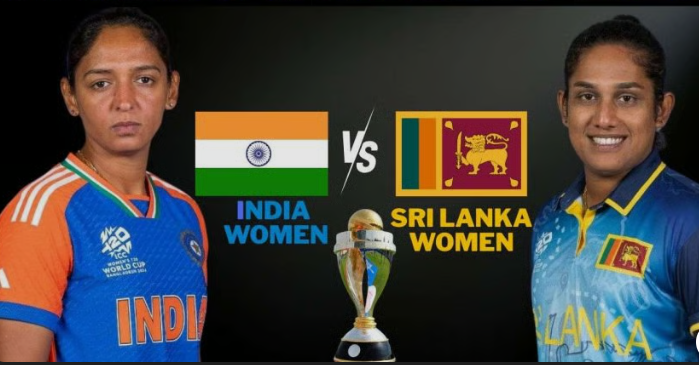
The rivalry between Sri Lanka Women’s national cricket team and India women’s national cricket team has evolved from one sided early encounters into a more structured and competitive contest over the years. What began with India’s clear dominance in both ODIs and T20Is gradually transformed into a tactical battle shaped by spin bowling, batting depth, and pressure handling. The standings between the two sides reflect changing phases of growth, where Sri Lanka fought to close the gap while India worked to maintain consistency at the top level. Each match tells a story of evolving skill, rising intensity, and shifting momentum in women’s cricket across Asia.
Head-to-Head Summary Table
Format
Total Matches Played
India Women Wins
Sri Lanka Women Wins
No Result / Tied
ODI
35
31
3
1
T20I
31
25
5
1
Recent Matches Table
Date
Format
Venue
Winner
Match Margin / Key Note
30 Dec 2025
T20I
Thiruvananthapuram
India Women
India won by 15 runs
28 Dec 2025
T20I
Thiruvananthapuram
India Women
India won by 30 runs
26 Dec 2025
T20I
Thiruvananthapuram
India Women
India won by 8 wickets
23 Dec 2025
T20I
Visakhapatnam
India Women
India won by 7 wickets
21 Dec 2025
T20I
Visakhapatnam
India Women
India won by 8 wickets
30 Sep 2025
ODI
Guwahati
India Women
India won by 59 runs
11 May 2025
ODI
Colombo
India Women
India won by 97 runs
04 May 2025
ODI
Colombo
Sri Lanka Women
Sri Lanka won by 3 wickets
Most Memorable Matches Table
Tournament / Year
Format
Key Context & Summary
Historical Significance
Asia Cup Final (2024)
T20I
Sri Lanka successfully chased down India’s 165/6, finishing on 167/2.
Sri Lanka’s greatest upset, securing their historic maiden Asia Cup title.
Tri-Series Final (2025)
ODI
India posted a mammoth 342/7 behind an explosive Smriti Mandhana century.
India’s highest-ever team total recorded on Sri Lankan soil.
Asian Games Final (2023)
T20I
India successfully defended a low total of 116/7, restricting Sri Lanka to 97/8.
India Women secured their historic first-ever Asian Games Gold Medal.
Asia Cup Final (2022)
T20I
India blew away Sri Lanka’s lineup, restricting them to 65/9 and chasing it in 8.3 overs.
Demonstrated peak tactical dominance for the Women in Blue.
Player Analysis Table
Player Name (Team)
Specialization
Role & Statistical Impact vs Opponent
Key Strengths
Smriti Mandhana (IND)
Opening Batter
Scored her iconic 11th ODI century vs SL; critical for giving fast powerplay starts.
Elite off-side driving, aggressive against pace.
Chamari Athapaththu (SL)
All-Rounder
The core anchor for Sri Lanka; holds the highest individual runs against India.
Explosive left-handed striking, heavy match-winner.
Harmanpreet Kaur (IND)
Captain / Batter
Solid middle-order baseline anchor; anchored the late 2025 series with a match-winning 68.
Rose to become the leading wicket-taker in women’s T20I history during the SL series.
Defensive off-spin, reliable late-order crisis bat.
Harshitha Samarawickrama (SL)
Top-order Batter
Stepped up as a primary run scorer alongside Athapaththu in major tournament wins.
Excellent player of spin, highly composed.
Renuka Singh (IND)
Pace Bowler
Regularly decimates the Sri Lankan top-order with destructive early swing spells.
Master of the new-ball inswinger.
Early Rivalry Foundations and First Encounters
The early phase of this rivalry between Sri Lanka Women’s national cricket team and India women’s national cricket team was heavily one sided, with India establishing dominance through superior batting depth and international experience. Sri Lanka entered these contests as an emerging side still learning to handle pressure against a more structured Indian unit. The scorecards from this era clearly show India posting strong totals and regularly restricting Sri Lanka with disciplined spin bowling. However, Sri Lanka’s resilience slowly began to surface through individual batting efforts and occasional bowling breakthroughs. These early encounters shaped the psychological foundation of the rivalry and set the tone for future competitive growth.
Score
Winning
Performance
Season
Key Moment
IND 210/4 vs SL 98
India
Top order dominance
Early ODI era
First major win gap
IND 160/6 vs SL 120
India
Sri Lanka resistance improves
Early T20 era
Sri Lanka fightback
IND 250/5 vs SL 140
India
Batting strength peak
ODI series phase
India big partnership
IND 145/7 vs SL 110
India
Spin control match
T20 series phase
Bowling dominance
Closing Gap and Competitive Evolution
As the rivalry matured, Sri Lanka began reducing the gap in performance against India. The team showed improved tactical awareness, especially in bowling variations and field placements. While India still held an advantage in consistency, Sri Lanka started producing competitive scorecards that reflected growing confidence. Middle order contributions and disciplined bowling spells allowed Sri Lanka to challenge India for longer periods in matches. India, on the other hand, adapted by strengthening its lower order and introducing more aggressive batting approaches in the powerplay. This phase marked the transformation of the rivalry from one sided contests to more competitive encounters where momentum shifts became more common.
Score
Winning
Performance
Season
Key Moment
IND 180/5 vs SL 155
India
Tight contest
Mid ODI era
Close finish
IND 150/8 vs SL 140
India
Low scoring battle
T20 phase
Bowling pressure
IND 200/6 vs SL 170
India
Strong chase control
ODI series
Middle order rescue
IND 135/7 vs SL 125
India
Spin battle intense
T20 era
Final overs fight
ICC Tournament Pressure Clashes
ICC tournaments brought a completely different intensity to the rivalry between Sri Lanka Women’s national cricket team and India women’s national cricket team. Matches in World Cups and T20 World Cups often carried qualification pressure, making every run and wicket crucial. India generally managed to handle these high pressure situations better due to deeper experience in global tournaments. Sri Lanka, however, occasionally produced surprise resistance through disciplined bowling spells and cautious batting approaches. These encounters are remembered for strategic adjustments, slower scoring phases, and calculated risks rather than pure aggression. The scorecards from ICC events reflect tighter margins and more tactical gameplay compared to bilateral series.
Score
Winning
Performance
Season
Key Moment
IND 170/6 vs SL 130
India
World Cup group stage
ICC ODI WC
Qualification impact
IND 145/5 vs SL 120
India
T20 WC clash
ICC T20 WC
Spin control
IND 160/7 vs SL 150
India
Close tournament game
ICC event
Late wickets
IND 190/4 vs SL 140
India
Dominant ICC win
World Cup
Top order surge
Batting Performances and Match Defining Innings
Batting performances have often been the defining factor in this rivalry. India’s top order consistently built strong platforms, allowing the middle order to accelerate in later overs. Sri Lanka relied more on isolated individual innings that occasionally shifted momentum but lacked consistency across matches. The difference in partnerships played a major role in shaping scorecards. India frequently produced 100 plus opening stands or strong second wicket partnerships that set match winning totals. Sri Lanka’s batting improvements came gradually, with a few standout innings that kept matches competitive. These performances highlight how batting depth and strike rotation shaped the rivalry over time.
Score
Winning
Performance
Season
Key Moment
IND 220/4 vs SL 160
India
Top order century stand
ODI series
Opening dominance
IND 175/6 vs SL 150
India
Middle order recovery
T20 series
Chase control
IND 200/5 vs SL 180
India
High scoring game
ODI phase
Power hitting
IND 140/7 vs SL 130
India
Slow pitch battle
T20 WC
Anchor innings
Bowling Battles and Tactical Matchups
Bowling duels between these two teams have often defined the tempo of matches. India’s spin attack has traditionally been a major strength, especially in subcontinental conditions where turn and control play a crucial role. Sri Lanka responded by focusing on variation, including slower balls, cutters, and tighter line lengths. While India’s bowlers frequently built pressure through dot balls and controlled economy rates, Sri Lanka relied on breakthrough wickets to disrupt partnerships. Tactical field settings and bowling rotations became increasingly important in close matches. The scorecards from this phase highlight how bowling strategy often decided outcomes more than batting fireworks.
Score
Winning
Performance
Season
Key Moment
IND 150/6 vs SL 115
India
Spin dominance
ODI phase
Middle over choke
IND 135/7 vs SL 120
India
Tight bowling duel
T20 series
Death overs control
IND 180/5 vs SL 145
India
Wicket cluster impact
ODI series
Collapse triggered
IND 160/8 vs SL 155
India
Close bowling finish
T20 WC
Final over pressure
Conclusion
The long standing rivalry between Sri Lanka Women’s national cricket team and India women’s national cricket team highlights the journey of two teams moving in different directions but meeting at crucial competitive crossroads. India’s sustained dominance in the standings reflects their depth, structure, and experience, while Sri Lanka’s progress shows resilience and gradual improvement in global cricket. Over time, the gap has narrowed in specific phases, making contests more engaging and unpredictable. This rivalry now stands as an important part of Asian women’s cricket, symbolizing growth, competition, and the rising standard of the women’s game in the international arena.