Table of Contents
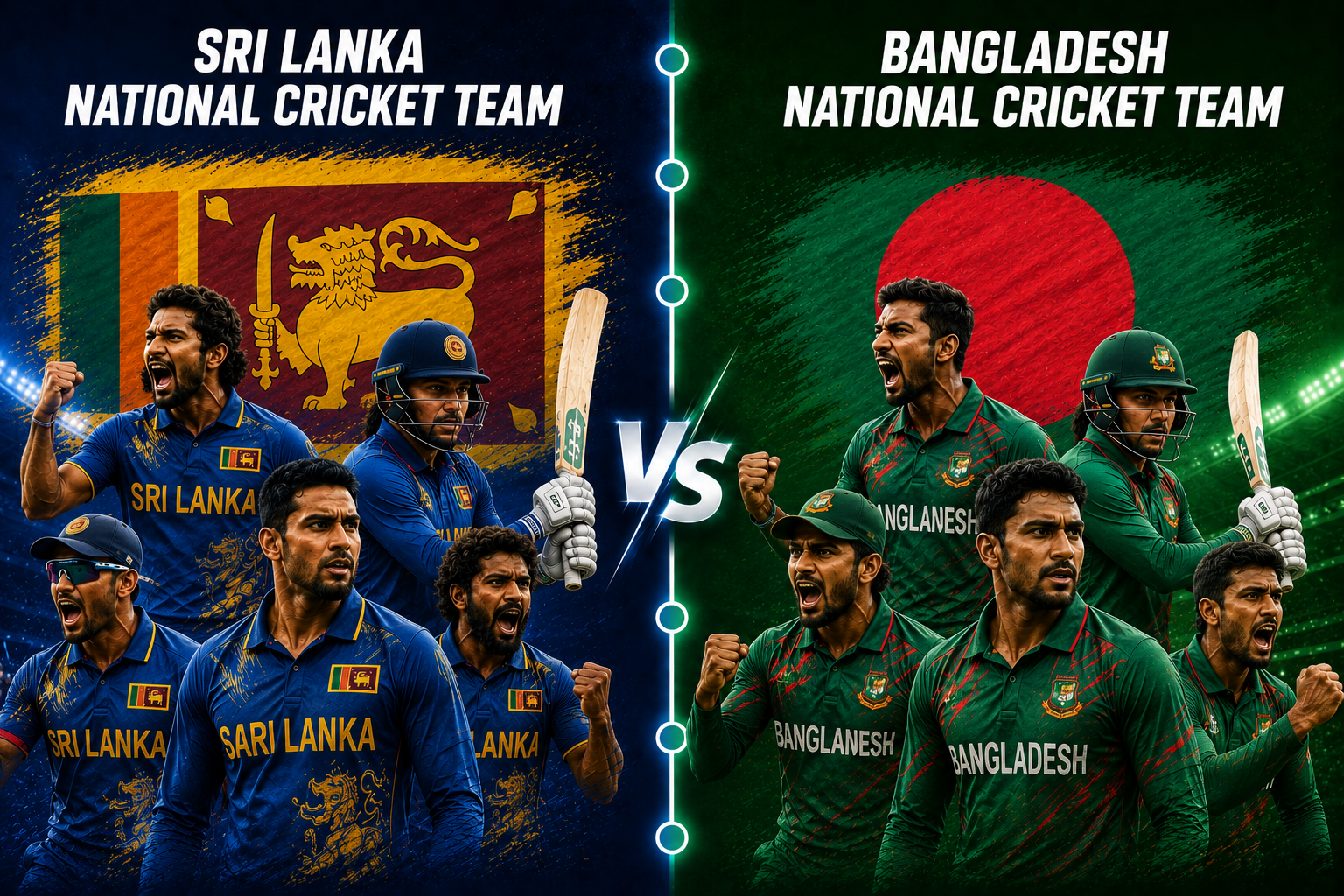
The rivalry between the two Asian cricket sides has grown steadily over the years, shaping a timeline filled with shifting momentum, emotional contests, and evolving team identities. What began as a one-sided contest gradually transformed into a more competitive battle as both teams developed stronger skill sets and better tactical awareness. Early matches highlighted a clear gap in experience, but over time, rising confidence and improved performances brought balance to the encounters. From ICC tournaments to bilateral series, every meeting added new chapters of pressure, resilience, and adaptation, making this rivalry an important part of modern Asian cricket history.
Team Statistics Summary Table
| Format | Total Matches | Sri Lanka Wins | Bangladesh Wins | No Result | Tied | Extra Column |
|---|---|---|---|---|---|---|
| Test | 28 | 21 | 1 | 6 | 0 | None |
| ODI | 57 | 43 | 12 | 2 | 0 | None |
| T20I | 22 | 13 | 9 | 0 | 0 | None |
| Combined | 107 | 77 | 22 | 8 | 0 | None |
| World Cup | 6 | 4 | 2 | 0 | 0 | None |
| Asia Cup | 17 | 13 | 4 | 0 | 0 | None |
Recent Matches Table
| Date | Venue | Format | Winner | Margin | Extra 1 | Extra 2 |
|---|---|---|---|---|---|---|
| 20 September 2025 | Dubai | T20I | Bangladesh | 4 wickets | Asia Cup | Neutral Venue |
| 16 July 2025 | Colombo | T20I | Bangladesh | 8 wickets | Bilateral | Sri Lanka Host |
| 13 July 2025 | Dambulla | T20I | Bangladesh | 83 runs | Bilateral | Sri Lanka Host |
| 10 July 2025 | Pallekele | T20I | Sri Lanka | 7 wickets | Bilateral | Sri Lanka Host |
| 08 July 2025 | Pallekele | ODI | Sri Lanka | 99 runs | Bilateral | Sri Lanka Host |
| 05 July 2025 | Colombo | ODI | Bangladesh | 16 runs | Bilateral | Sri Lanka Host |
Individual Batting Records Table
| Player | Team | Matches | Innings | Runs | Highest Score | Average |
|---|---|---|---|---|---|---|
| Kumar Sangakkara | Sri Lanka | 15 | 21 | 1816 | 319 | 95.57 |
| Mahela Jayawardene | Sri Lanka | 15 | 20 | 1146 | 166 | 63.66 |
| Mushfiqur Rahim | Bangladesh | 17 | 31 | 1107 | 200 | 36.90 |
| Tamim Iqbal | Bangladesh | 13 | 25 | 899 | 115 | 35.96 |
| Shakib Al Hasan | Bangladesh | 11 | 21 | 754 | 144 | 37.70 |
| Angelo Mathews | Sri Lanka | 12 | 16 | 733 | 199 | 56.38 |
| Kusal Mendis | Sri Lanka | 12 | 18 | 711 | 194 | 41.82 |
Individual Bowling Records Table
| Player | Team | Matches | Innings | Wickets | Best Bowling | Average |
|---|---|---|---|---|---|---|
| Muttiah Muralitharan | Sri Lanka | 11 | 19 | 89 | 6/18 | 13.37 |
| Rangana Herath | Sri Lanka | 12 | 21 | 48 | 5/12 | 26.29 |
| Shakib Al Hasan | Bangladesh | 11 | 19 | 38 | 5/70 | 36.10 |
| Taijul Islam | Bangladesh | 10 | 16 | 33 | 4/83 | 42.15 |
| Lasith Malinga | Sri Lanka | 15 | 15 | 31 | 4/24 | 22.41 |
| Mehidy Hasan Miraz | Bangladesh | 9 | 15 | 29 | 4/37 | 38.44 |
| Dilruwan Perera | Sri Lanka | 6 | 11 | 26 | 5/32 | 25.1 |
Early Encounters and Uneven Beginnings in Asian Cricket
The opening phase of meetings between the two sides in Asian cricket was defined by a clear gap in experience, planning, and execution. One team arrived with a stable core, proven performers, and a strong understanding of match situations, while the other was still learning how to compete consistently at the international level. Early contests often moved in one direction, with disciplined bowling attacks applying pressure from the start and batting units building steady totals without much interruption. The developing side struggled to handle sustained spin pressure and high-quality pace variations, which often resulted in collapses under scoreboard pressure. However, these matches were not without value for the emerging team, as individual performances occasionally stood out and hinted at future growth. Over time, exposure to stronger opposition helped build resilience, tactical awareness, and improved shot selection, slowly reducing the performance gap in later years.
| Phase | Time period | Match pattern | Key observation |
| Early development | Initial years | One-sided contests | Experience gap visible |
| Early development | Initial years | Spin dominance | Batting struggles |
| Early development | Initial years | Limited competitiveness | Learning phase |
| Early development | Initial years | Occasional resistance | Individual brilliance |
Established Era vs Emerging Identity
As the timeline progressed, a noticeable contrast emerged between a highly structured team and a developing side trying to define its identity. The more experienced team relied on consistency, disciplined batting orders, and bowlers capable of maintaining pressure across long spells. Their game management allowed them to control tempo and dictate conditions in most encounters. On the other hand, the emerging team began experimenting with combinations, batting approaches, and bowling variations in search of a winning formula. While results still favored the stronger side, the competitive gap started narrowing in certain matches. Fielding improvements and better temperament in pressure situations became visible, signaling the beginning of a more balanced rivalry. This phase represented an important shift where confidence started replacing hesitation, and matches became less predictable than before.
| Phase | Era | Key strength | Match behavior |
| Transition stage | Middle years | Structured gameplay | Controlled dominance |
| Transition stage | Middle years | Tactical improvement | Competitive phases |
| Transition stage | Middle years | Better fielding | Fewer errors |
| Transition stage | Middle years | Growing confidence | Narrowing gap |
First Signs of Resistance in High Pressure Games
Over time, certain matches began showing a shift in mindset from one side. Instead of simply trying to survive stronger opponents, the developing team started showing genuine resistance in high-pressure situations. Chasing targets became more structured, with partnerships forming under pressure rather than quick collapses. Bowlers also started using variations more effectively, mixing slower deliveries and tighter lines to restrict scoring. These adjustments did not always lead to victories, but they changed the overall competitive nature of encounters. Matches began stretching deeper into final overs, creating tension and unpredictability. The stronger side could no longer rely on early control alone, as momentum swings became more common. This phase marked the beginning of a rivalry that was becoming emotionally charged and tactically complex.
| Phase | Situation | Improvement | Impact |
| Pressure phase | Chasing games | Better partnerships | Longer contests |
| Pressure phase | Bowling spells | Variation use | Reduced scoring |
| Pressure phase | Batting approach | Controlled aggression | Competitive totals |
| Pressure phase | Match finish | Late pressure handling | Narrow margins |
ICC Tournament Clashes That Shifted the Rivalry Tone
Global tournaments added a completely different level of pressure to the encounters. Matches played in World Cups and continental championships carried higher stakes, media attention, and emotional intensity. In these environments, even small mistakes could change outcomes dramatically. The developing team occasionally delivered fearless performances on big stages, challenging expectations and creating unforgettable moments. Meanwhile, the experienced side leaned on its ability to handle pressure situations, often relying on calm decision-making and depth in both batting and bowling. These matches became turning points in the rivalry timeline because they showed that outcomes were no longer predictable. Every tournament clash added emotional weight, making future meetings more anticipated and competitive.
| Tournament stage | Competition | Key factor | Outcome pattern |
| ICC events | World Cup matches | High pressure execution | Tight finishes |
| ICC events | Group stages | Momentum shifts | Unpredictable results |
| ICC events | Knockouts | Tactical discipline | Narrow margins |
| ICC events | Continental cups | Experience advantage | Competitive balance |
Rise in Home Conditions and Regional Advantage
Home conditions played a major role in shaping the rivalry over time. Matches played in familiar environments provided clear advantages, especially on pitches that favored spin and slower bowling. One side often used this familiarity to build strong tactical plans, using bowlers who understood surface behavior and batters who adapted quickly to local conditions. The visiting team initially struggled to adjust, particularly against turning tracks and humid conditions. However, as exposure increased, adaptability improved significantly. Visiting performances became more competitive, and matches started producing more balanced results. Home advantage remained important, but it no longer guaranteed one-sided dominance. Instead, strategy, preparation, and adaptability became equally important in determining outcomes.
| Condition phase | Venue type | Advantage factor | Match impact |
| Home dominance | Subcontinent pitches | Spin-friendly surfaces | Strong control |
| Adaptation phase | Touring matches | Experience gain | Improved competitiveness |
| Balanced phase | Mixed venues | Tactical planning | Even contests |
| Modern phase | All conditions | Preparation quality | Unpredictable results |
Modern Era Battles With Close Finishes
In recent years, the rivalry has evolved into a much more balanced and emotionally intense contest. The gap that once existed has significantly reduced, leading to frequent close finishes where matches are decided in the final overs or final sessions. Both teams now display deeper batting line-ups and more versatile bowling attacks, allowing them to respond better under pressure. Fielding standards have improved across the board, reducing errors and increasing the importance of small moments. Matches are no longer predictable, and momentum shifts have become a defining feature. Fans now expect tension-filled encounters where every run and wicket matters. This modern phase represents a matured rivalry built on respect, competition, and high-pressure execution.
| Modern phase | Recent years | Key feature | Match result style |
| Balanced era | Latest matches | Close finishes | Final over outcomes |
| Balanced era | Latest matches | Strong batting depth | Competitive totals |
| Balanced era | Latest matches | Improved bowling variety | Tight defense |
| Balanced era | Latest matches | High pressure moments | Uncertain results |
Statistical Evolution Across the Timeline
The long-term statistical trend of this rivalry shows a clear evolution from dominance to competitiveness. Early records were heavily tilted toward one side due to experience, skill depth, and stronger team structure. However, over time, the improving side began closing gaps in batting averages, bowling economy rates, and partnership stability. The modern phase reflects a far more balanced statistical profile, where outcomes vary significantly based on conditions and match situations. While numbers show improvement, they do not fully capture the emotional intensity and pressure-driven performances that define this rivalry. Each era tells a different story, making the overall timeline rich, layered, and unpredictable.
| Era | Performance trend | Batting strength | Bowling control |
| Early era | One-sided | Low consistency | Strong dominance |
| Middle era | Improving | Developing unit | Reduced gap |
| Transition era | Competitive | Balanced output | Tactical bowling |
| Modern era | Near parity | High consistency | Variable results |
Conclusion
The journey of this cricket rivalry reflects how teams evolve through experience, challenges, and continuous improvement. From early dominance by one side to closely fought modern encounters, the timeline showcases changing strategies, emerging talents, and high-pressure performances. Both teams have contributed memorable moments that defined different eras of their cricketing growth. Today, the rivalry stands on a far more balanced footing, where results depend on execution rather than reputation. It remains a compelling contest that continues to attract fans, offering unpredictability, intensity, and a true reflection of competitive Asian cricket spirit.
FAQs
1. When did the rivalry between the two teams begin?
The rivalry began in the early years after the newer team entered international cricket, with initial matches showing a clear experience gap.
2. Which team dominated the early encounters?
The more experienced side dominated early matches due to stronger batting depth, disciplined bowling, and better match control.
3. What changed the balance of the rivalry over time?
Improved player development, better exposure, and increased confidence helped the emerging team become more competitive.
4. Are modern matches between these teams competitive?
Yes, recent encounters are much closer, often decided in the final overs or key pressure moments.
5. Do home conditions affect the results?
Yes, home conditions play a significant role, especially on subcontinental pitches that favor spin and local familiarity.
| Read Also: New Zealand National Cricket Team Standings |