Table of Contents
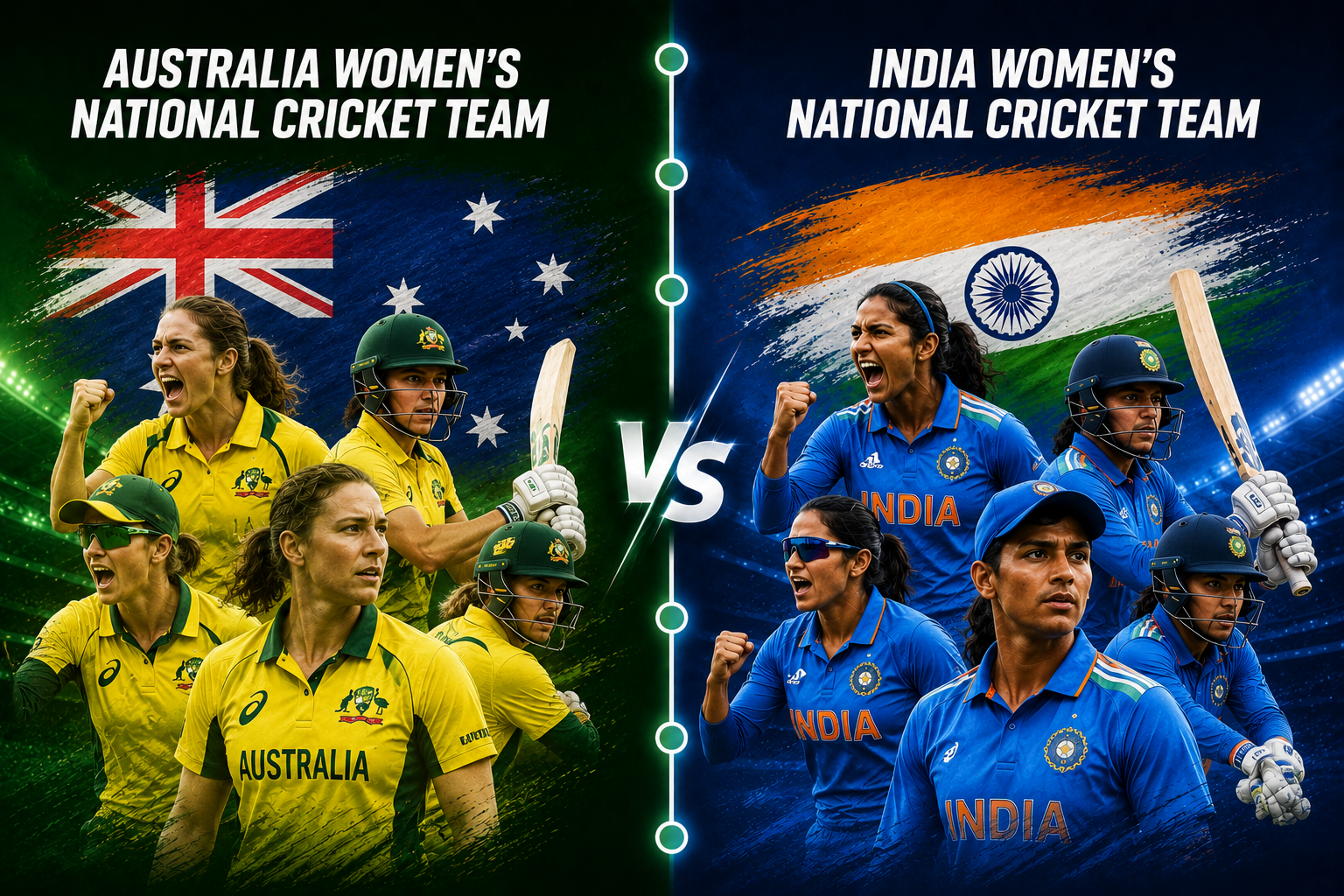
The rivalry between these two women’s cricket teams has grown into one of the most compelling stories in modern international cricket. From their earliest encounters, the contests reflected a clear difference in experience, structure, and execution, yet also revealed the steady rise of competitiveness over time. What began as one-sided matches slowly evolved into tightly fought battles across formats. Each era brought new stars, shifting strategies, and changing momentum. From dominant performances in early years to high-pressure ICC clashes in recent times, this rivalry has become a showcase of skill, resilience, and evolving cricket standards that continue to shape women’s cricket history.
Recent Matches Table
| Match Date [1] | Format | Venue | Winner | First Innings Score | Second Innings Score | Margin |
|---|---|---|---|---|---|---|
| 06 Mar 2026 | Test | Perth | Australia | India 198 and 149 | Australia 323 and 28/0 | 10 wickets |
| 01 Mar 2026 | ODI | Hobart | Australia | Australia 409/7 | India 224 | 185 runs |
| 27 Feb 2026 | ODI | Hobart | Australia | India 251/9 | Australia 252/5 | 5 wickets |
| 24 Feb 2026 | ODI | Brisbane | Australia | India 214 | Australia 217/4 | 6 wickets |
| 21 Feb 2026 | T20I | Adelaide | India | India 176 | Australia 159 | 17 runs |
| 19 Feb 2026 | T20I | Canberra | Australia | Australia 163 | India 144 | 19 runs |
| 15 Feb 2026 | T20I | Sydney | India | Australia 133 | India 50/1 | 21 runs (DLS) |
Team Statistics Summary Table
| Format | Played | Australia Won | India Won | Tied | No Result | Highest Score | Lowest Score |
|---|---|---|---|---|---|---|---|
| Test Matches | 12 | 5 | 2 | 0 | 5 | Australia 351 | India 149 |
| One Day Internationals | 55 | 44 | 11 | 0 | 0 | Australia 412 | India 102 |
| Twenty20 Internationals | 36 | 26 | 9 | 0 | 1 | Australia 211 | India 50 |
| Overall Bilateral | 103 | 75 | 22 | 0 | 6 | Australia 412 | India 50 |
| ICC Tournament Events | 18 | 13 | 5 | 0 | 0 | Australia 338 | India 120 |
| Matches in Australia | 44 | 32 | 8 | 0 | 4 | Australia 409 | India 133 |
| Matches in India | 41 | 30 | 9 | 0 | 2 | Australia 412 | India 102 |
Individual Batting Records Table
| Player Name | Country | Matches Played | Total Runs | Highest Score | Batting Average | Strike Rate |
|---|---|---|---|---|---|---|
| Smriti Mandhana | India | 62 | 1945 | 127 | 34.73 | 118.45 |
| Harmanpreet Kaur | India | 68 | 1812 | 171 | 32.35 | 105.12 |
| Alyssa Healy | Australia | 58 | 1640 | 158 | 31.53 | 126.80 |
| Ellyse Perry | Australia | 72 | 1582 | 77 | 36.79 | 98.60 |
| Jemimah Rodrigues | India | 45 | 1124 | 127 | 29.57 | 112.30 |
| Beth Mooney | Australia | 42 | 1085 | 89 | 33.90 | 115.15 |
| Shafali Verma | India | 38 | 915 | 64 | 24.07 | 138.20 |
Individual Bowling Records Table
| Player Name | Country | Matches Played | Wickets Taken | Best Bowling | Economy Rate | Bowling Average |
|---|---|---|---|---|---|---|
| Ellyse Perry | Australia | 72 | 68 | 5/19 | 4.35 | 22.15 |
| Deepti Sharma | India | 55 | 54 | 4/41 | 4.62 | 26.40 |
| Megan Schutt | Australia | 48 | 51 | 4/18 | 4.20 | 20.85 |
| Alana King | Australia | 24 | 31 | 4/33 | 4.15 | 18.50 |
| Rajeshwari Gayakwad | India | 32 | 29 | 4/34 | 4.85 | 30.12 |
| Annabel Sutherland | Australia | 26 | 28 | 5/40 | 4.72 | 21.45 |
| Renuka Singh | India | 22 | 24 | 3/28 | 5.10 | 28.30 |
Rivalry Origins and Early Competitive Spark
The early phase of this rivalry reflected two teams moving in very different directions in women’s cricket development. One side had already built a strong structure, deep domestic systems, and world class consistency, while the other was still finding rhythm on the international stage. When they first met, the gap in experience was clearly visible, especially in pressure situations and game awareness. However, those early matches also revealed raw talent and growing ambition from the emerging side. Batters showed glimpses of confidence against disciplined bowling attacks, while bowlers tried to adapt to higher intensity opposition. Over time, these early contests laid the foundation for a competitive storyline that would slowly evolve. The stronger team dominated most encounters, but the competitive spark was never missing. Each match added lessons, shaping future strategies and building belief that the gap could eventually be reduced through discipline and exposure.
| Year | Format | Winner | Key Performance |
| 1997 | ODI | Australia | Dominant bowling control |
| 1998 | ODI | Australia | Top order batting strength |
| 2000 | Test | Australia | Long format superiority |
| 2001 | ODI | Australia | Fielding consistency |
First Major Turning Point in the Rivalry
As the rivalry matured, the first significant turning point arrived when matches began to show tighter competition and reduced dominance from one side. The improving team started to challenge established patterns with more aggressive batting and smarter bowling changes. There were moments when early wickets put pressure on the dominant side, forcing them to rebuild innings instead of cruising. This phase marked the beginning of belief that matches could be contested rather than one sided. Experienced players from the stronger team still held control in key moments, but the margin of victory began to shrink. Field placements became more tactical, and captains had to think deeper under pressure. Fans also started noticing that the gap was closing slowly, even if results still favored the stronger side. This shift created a psychological change, where both teams entered matches with more respect and caution for each other’s evolving strengths.
| Year | Format | Winner | Key Performance |
| 2005 | ODI | Australia | Late middle order recovery |
| 2006 | ODI | Australia | Improved India batting effort |
| 2008 | ODI | Australia | Spin resistance shown |
| 2009 | ODI | Australia | Narrower margin victory |
T20 Era and Rapid Evolution of the Rivalry
The introduction of the shortest format completely transformed the nature of contests between these two sides. Suddenly, matches became faster, riskier, and more unpredictable. Batters had the freedom to attack from the first over, which reduced the advantage of traditionally dominant bowling attacks. The emerging team found this format more suitable for expressing their aggressive intent, leading to more competitive encounters. Power hitters started influencing results, and momentum shifted rapidly within a few overs. On the other hand, the experienced side adapted quickly with smarter death bowling and innovative field placements. Several matches in this era went down to the final overs, creating high tension moments for players and fans alike. The unpredictability of the format helped reduce historical gaps, making each contest feel like a fresh battle rather than a predictable outcome. This phase became the true foundation of a modern rivalry filled with excitement and unpredictability.
| Year | Format | Winner | Key Performance |
| 2010 | T20 | Australia | Strong powerplay batting |
| 2012 | T20 | Australia | Death over bowling control |
| 2014 | T20 | Australia | Tight chase completion |
| 2016 | T20 | Australia | Balanced all round display |
ICC Tournament Clashes That Elevated Pressure
When the rivalry moved into global tournaments, the pressure level increased dramatically. Knockout matches and World Cup encounters brought out the best and worst moments for both teams. Experience played a major role in these games, as handling pressure situations became as important as skill execution. One side consistently showed calmness in semifinals and finals, while the other often fought hard but struggled to close out key moments. However, there were also instances where underdogs surprised everyone with fearless performances, taking early wickets or building strong partnerships. These matches were not just about skill but also mental strength, as every run and wicket carried massive importance. The intensity of ICC events added emotional weight, making each encounter memorable for fans. Over time, these tournaments became the true benchmark for measuring progress and consistency between the two sides.
| Year | Format | Winner | Key Performance |
| 2017 | ODI WC | Australia | Final experience advantage |
| 2018 | T20 WC | Australia | Bowling under pressure |
| 2020 | T20 WC | Australia | Home crowd dominance |
| 2022 | ODI WC | Australia | Middle order stability |
Batting Battles
Batting performances have always defined the emotional core of this rivalry. One side consistently relied on structured partnerships and controlled aggression, while the other leaned on individual brilliance and explosive innings. Top order batters often set the tone for the entire match, with early breakthroughs shifting momentum quickly. There have been innings where one player completely changed the direction of the game through pure timing and placement, while others responded with powerful counterattacks. The contrast in styles made these battles exciting to watch, as patience clashed with aggression on a regular basis. In many matches, the outcome depended on which batting unit handled pressure better during middle overs. Some players rose repeatedly in big matches, creating reputations as match winners. These batting duels became symbolic of the larger rivalry narrative, highlighting both consistency and unpredictability across different eras.
| Player | Team | Impact Type | Notable Contribution |
| Meg Lanning | Australia | Anchor role | Consistent big scores |
| Alyssa Healy | Australia | Aggressive opener | Fast starts |
| Smriti Mandhana | India | Stroke play | Elegant innings |
| Harmanpreet Kaur | India | Power hitting | Match turning knocks |
Bowling Duels
Bowling contests added strategic depth to this rivalry, often deciding matches before batting even fully settled. One side traditionally relied on disciplined seam and swing bowling, while the other developed spin variations to control middle overs. Early breakthroughs often dictated the direction of the game, putting pressure on batting lineups to rebuild. There were matches where bowlers completely dominated conditions, making scoring extremely difficult. Variations in pace, line, and length became crucial, especially in shorter formats. Death overs often decided outcomes, with experienced bowlers executing plans under extreme pressure. Some bowlers gained reputations for delivering in crucial moments, consistently breaking partnerships when needed. These bowling duels highlighted the importance of tactical planning and adaptability across conditions. Over time, both teams developed more balanced attacks, making contests even more competitive and less predictable.
| Bowler | Team | Strength | Key Skill |
| Ellyse Perry | Australia | All round control | Swing and accuracy |
| Megan Schutt | Australia | New ball threat | Seam movement |
| Jhulan Goswami | India | Experience | Early wickets |
| Rajeshwari Gayakwad | India | Spin control | Middle overs pressure |
Fielding Fitness and Modern Cricket Standards
Fielding has become a defining factor in modern contests between these two teams. Earlier matches often saw differences in agility and ground coverage, but modern cricket has reduced that gap significantly. One side has long been known for elite fielding standards, quick reflexes, and sharp catching ability. The other has worked hard to improve fitness levels, resulting in visible progress in saving runs and creating pressure through fielding. Run outs, diving stops, and boundary saves have often shifted momentum in closely contested matches. In high pressure games, fielding errors have proven costly, while brilliant efforts have created game changing moments. Fitness standards now influence selection and strategy, as teams prioritize athleticism along with skill. This evolution has made matches faster, tighter, and more competitive than ever before, reflecting the modern demands of international cricket.
| Player | Team | Fielding Role | Impact Moment |
| Alyssa Healy | Australia | Wicketkeeper | Quick stumpings |
| Ellyse Perry | Australia | Outfield | Boundary saves |
| Harmanpreet Kaur | India | Inner ring | Run out assists |
| Smriti Mandhana | India | Outfield | Diving catches |
Conclusion
Over the years, this rivalry has transformed from predictable outcomes into highly competitive and emotionally charged contests. The stronger team initially maintained control, but consistent development from the other side gradually balanced the competition. Modern encounters now reflect tactical depth, improved fitness, and world class performances from both sides. ICC tournaments and bilateral series have produced unforgettable moments, shaping a rivalry built on respect and ambition. As both teams continue to evolve, the future promises even closer matches and new match winners. This journey stands as a powerful example of how determination and growth can reshape international cricket rivalries over time.
FAQs
1. Why is this rivalry important in women’s cricket?
It represents the evolution of competitive standards, showcasing how emerging teams close gaps with established champions over time.
2. Which team dominated the early years?
The more experienced side maintained clear dominance in the early phase due to stronger structure and consistency.
3. How did T20 cricket change the rivalry?
The shorter format increased unpredictability, allowing closer finishes and more aggressive performances.
4. What role do ICC tournaments play in this rivalry?
ICC events intensify pressure, often producing the most memorable and defining matches between the two teams.
5. Has the rivalry become more balanced in recent years?
Yes, improved skills, fitness, and tactical awareness have made recent contests far more competitive.
| Read Also: New Zealand National Cricket Team Standings |