Table of Contents
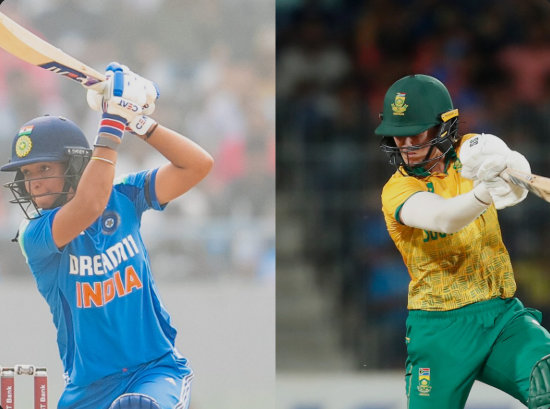
The rivalry between the India Women’s National Cricket Team and the South Africa Women’s National Cricket Team has evolved into one of the most competitive matchups in modern women’s cricket. What began as one-sided contests in early years has now transformed into tightly fought battles that regularly influence ICC standings and global rankings. Both teams have developed distinct identities, with India relying on spin strength and batting depth, while South Africa has built a reputation around pace attack and athletic fielding. Across formats, their encounters have produced shifting momentum, dramatic scorecards, and rising fan anticipation. Every series now carries significance beyond wins and losses, shaping confidence, rankings, and long-term cricketing narratives for both nations.
Head-to-Head Summary
| Format | Matches Played | India Won | South Africa Won | No Result / Drawn |
|---|---|---|---|---|
| Women ODI | 36 | 21 | 14 | 1 |
| Women T20I | 26 | 11 | 10 | 5 |
| Women Test | 4 | 4 | 0 | 0 |
Recent Matches
| Date | Format | Venue | Winner | Margin of Victory |
|---|---|---|---|---|
| 27 April 2026 | T20I | Benoni | South Africa | Won by 23 runs |
| 25 April 2026 | T20I | Johannesburg | India | Won by 14 runs |
| 22 April 2026 | T20I | Johannesburg | South Africa | Won by 9 wickets |
| 19 April 2026 | T20I | Durban | South Africa | Won by 8 wickets |
| 17 April 2026 | T20I | Durban | South Africa | Won by 6 wickets |
Most Memorable Matches
| Match Event | Venue and Date | Match Context and Significance | Final Score and Outcome |
|---|---|---|---|
| ICC Women World Cup Final | Navi Mumbai, Nov 2025 | India lifted its maiden World Cup trophy. Smriti Mandhana anchor hit under intense pressure, and Deepti Sharma secured player of the series honours. | IND: 298/7 (50) SA: 246 (45.3) India won by 52 runs |
| One Off Test Match | Chennai, June 2024 | A record breaking showcase where India posted a massive 603 runs in their first innings before winning by 10 wickets. | IND: 603/6d and 37/0 SA: 266 and 373 (f/o) India won by 10 wickets |
| ICC Women World Cup Group Match | Christchurch, March 2022 | A final over thriller where a dramatic no ball on the penultimate delivery knocked India out of the tournament. | IND: 274/7 (50) SA: 275/7 (50) South Africa won by 3 wickets |
Player Analysis Table
| Player Name | Team | Role | Key Strength / Recent Impact against Opponent |
|---|---|---|---|
| Deepti Sharma | India | All Rounder | Historic World Cup double (200 runs + 20 wickets); single handedly saved the 4th T20I in 2026. |
| Laura Wolvaardt | South Africa | Opening Batter / Captain | Elite chase anchor; smashed a brilliant 92 runs off 56 balls during the final 2026 T20I leg. |
| Smriti Mandhana | India | Opening Batter | Classy stroke play; named Player of the Match during the massive 2025 World Cup final triumph. |
| Chloe Tryon | South Africa | All Rounder | Vital structural balance; consistently picks up middle over wickets and chips in with death over sixes. |
| Shafali Verma | India | Opening Batter | Dangerous power hitter; youngest player ever to secure a Player of the Match award in a World Cup final knockout. |
Early Foundations of the Rivalry
The early phase of the India Women and South Africa Women rivalry was built on inconsistency, learning curves, and raw potential. India entered with stronger spin depth while South Africa relied heavily on pace and athletic fielding. Their first meetings were not high-scoring thrillers but tactical battles where experience mattered more than aggression. India often controlled middle overs through disciplined bowling, while South Africa looked for breakthroughs in powerplays. The standings during this phase reflected India’s slight edge, but margins were never dominant. Fans began noticing a pattern of competitive respect forming. Even in defeats, South Africa showed flashes of brilliance that hinted at future balance in the rivalry, setting the stage for a more intense era ahead in international women’s cricket development.
| Score | Winning | Performance | Season | Other Info |
|---|---|---|---|---|
| 3-1 ODI edge | India | India spin dominance | Early era | First encounters |
| 2-2 T20 split | Mixed | Balanced fight | Initial years | Tactical learning |
| 4-0 series | India | Strong batting control | Early phase | Home advantage |
| 3-2 series | India | Close contests | Transitional | Rising competitiveness |
First Major Turning Point Series
The rivalry shifted dramatically during the first major turning point series when South Africa began challenging India’s control with aggressive top-order batting. India’s response came through structured partnerships and spin pressure in the middle overs. One ODI series stood out where South Africa chased down a tricky target, changing perception around their batting maturity. India countered in T20s with improved death bowling execution. The standings tightened as neither team could dominate consistently. This phase marked the emotional shift in the rivalry, where confidence replaced hesitation. Players on both sides started treating each contest like a statement match, and every scorecard began reflecting narrow margins instead of one-sided results, increasing anticipation among fans and analysts alike.
| Score | Winning | Performance | Season | Other Info |
|---|---|---|---|---|
| 2-1 ODI | South Africa | Chase strength | Turning phase | Away win impact |
| 3-2 T20 | India | Death bowling | Same season | Close finishes |
| 1-1 ODI | Drawn series | Balanced sides | Mid transition | Tactical shift |
| 2-0 T20 | India | Batting depth | Breakthrough | Momentum swing |
Rise of Competitive Balance in Standings
As ICC standings became more competitive, India and South Africa entered a phase of near-equal rivalry intensity. Every series began influencing global rankings, adding pressure to each match. India relied on experienced batters anchoring innings while South Africa improved their spin handling significantly. Matches often went down to final overs, with fielding errors and strike rotation becoming decisive factors. The competitive balance was now evident in both ODI and T20 formats. Neither team could afford lapses, as standings shifted after every series. This era produced memorable finishes and growing fan engagement, especially when underdog victories began reshaping expectations. Analysts noted that consistency, not just talent, was now defining superiority in this evolving women’s cricket rivalry.
| Score | Winning | Performance | Season | Other Info |
|---|---|---|---|---|
| 2-2 ODI | Even | Balanced squads | Peak balance | Ranking pressure |
| 3-2 T20 | South Africa | Clutch finishing | Competitive era | Last over wins |
| 2-1 ODI | India | Experience edge | Mid phase | Spin impact |
| 1-1 T20 | Shared | Equal strength | Transition | Tight standings |
Defining Clashes That Changed the Rivalry
Defining clashes between India Women and South Africa Women often came in ICC tournaments where pressure peaked. These matches were not just about skill but mental strength under global scrutiny. India’s top-order stability was tested repeatedly by South African pace attacks that exploited early movement. In return, India’s spinners controlled crucial middle overs in knockout games. One memorable contest saw a dramatic collapse followed by a late recovery chase that shifted tournament standings. These matches redefined how both teams approached high-pressure games. The rivalry gained global attention as scorecards showed unpredictable swings. Each encounter now carried knockout intensity, making even group-stage matches feel like semi-finals in terms of emotional and tactical weight.
| Score | Winning | Performance | Season | Other Info |
|---|---|---|---|---|
| 1-0 KO | India | Spin choke | ICC event | Knockout pressure |
| 2-1 T20 | South Africa | Pace dominance | Global stage | Upset win |
| 3-2 ODI | India | Batting recovery | Tournament | High pressure |
| 1-1 split | Even | Tactical battle | ICC cycle | Tight margins |
Modern Era Rivalry
In the modern era, the rivalry between India Women and South Africa Women has become one of precision versus power. India’s batting lineup has grown deeper, with flexible strike rotation and aggressive finishers, while South Africa’s pace attack continues to improve with disciplined line and length strategies. Fitness standards and fielding quality have elevated both teams significantly. Recent standings reflect alternating dominance depending on conditions. India performs strongly in subcontinent conditions, while South Africa maximizes bounce-friendly pitches. Matches are now decided by small tactical decisions such as bowling changes and powerplay utilization. Fans expect close finishes every time these teams meet, and scorecards often show narrow victories that reflect how evenly matched this modern rivalry has become.
| Score | Winning | Performance | Season | Other Info |
|---|---|---|---|---|
| 2-1 T20 | India | Batting depth | Modern era | Close finish |
| 2-1 ODI | South Africa | Pace attack | Recent season | Away advantage |
| 1-1 T20 | Even | Tactical balance | Current cycle | Fine margins |
| 3-2 ODI | India | Chase control | Modern phase | High intensity |
Conclusion
The India Women versus South Africa Women rivalry stands today as a symbol of balance, growth, and competitive maturity in international cricket. From early dominance phases to modern-day nail-biting finishes, the journey reflects how both teams have continuously evolved in skill, strategy, and mental toughness. ICC standings now change hands frequently between them, proving how evenly matched they have become. Each encounter adds a new layer of intensity, with individual performances often deciding outcomes in crucial moments. As both sides continue to strengthen their squads, this rivalry is set to remain unpredictable, emotional, and strategically rich, offering fans unforgettable cricketing drama for years to come.