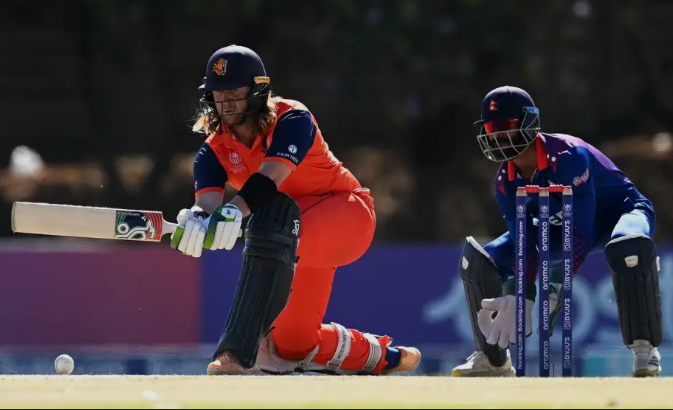
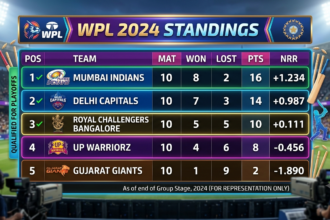
The rivalry between Nepal National Cricket Team and Netherlands National Cricket Team has quietly grown into one of the most competitive stories in associate cricket. What began as uneven encounters between an emerging Asian side and an experienced European outfit has now turned into a balanced contest shaped by evolving skills, tactical maturity, and ICC tournament pressure. Nepal’s rise through passionate performances and fearless batting has challenged the structured and disciplined approach of Netherlands cricket. Over the years, their standings, scorecards, and head-to-head battles have reflected a shifting balance of power. Every match between these two teams now carries importance, often influencing rankings, qualification scenarios, and regional dominance in associate cricket.
Head-to-Head Summary
Format
Total Matches Played
Nepal Wins
Netherlands Wins
Tied / No Result
One-Day Internationals (ODIs)
6
3
3
0
Twenty20 Internationals (T20Is)
14
6
7
1 (Tied)
Other List A Matches
3
2
1
0
Overall Combined Total
23
11
11
1
Recent Matches (Last 5 Encounters)
Date
Format
Venue
Match Details & Scores
Winner / Margin
June 19, 2025
T20I
Glasgow
Netherlands 174/7 (20 ov); Nepal 180/4 (19.4 ov)
Nepal won by 6 wickets
June 16, 2025
T20I
Glasgow
Nepal 152/8 (20 ov); Netherlands 152/7 (20 ov)
Netherlands won via 3rd Super Over
June 10, 2025
ODI
Dundee
Nepal 236/9 (50 ov); Netherlands 220 (49.2 ov)
Nepal won by 16 runs
June 04, 2025
ODI
Dundee
Netherlands 225 (49.1 ov); Nepal 226/5 (47.1 ov)
Nepal won by 5 wickets
June 04, 2024
T20I
Dallas
Nepal 106 (19.2 ov); Netherlands 109/4 (18.4 ov)
Netherlands won by 6 wickets
Most Memorable Matches
Match & Date
Importance
Context & Key Moments
The Triple Super Over (June 16, 2025)
Historic Milestone
Marked the first time in international cricket history a match required three consecutive Super Overs to break a tie. After matching totals of 152 runs, the first two Super Overs ended in ties before Zach Lion-Cachet and Michael Levitt sealed it for the Dutch.
1-Run ODI Cliffhanger (August 3, 2018)
Maiden ODI Series Draw
Nepal defended a narrow score of 216 runs in Amstelveen. Skipper Paras Khadka’s tactical brilliance and Sompal Kami’s multi-wicket display restricted the Dutch to 215, giving Nepal its first-ever ODI victory.
T20 World Cup Clash (June 4, 2024)
Global Stage Presence
Played at the Grand Prairie Stadium in Texas during the ICC Men’s T20 World Cup. Netherlands bowlers utilized overcast conditions well, keeping Nepal to 106 to secure a hard-fought group stage victory.
Key Player Analysis
Player
Team
Role
Statistical Impact Against Opposition
Aarif Sheikh
Nepal
All-Rounder
Anchored both 2025 ODI wins in Dundee, earning multiple Player of the Match honors with scores like 84(85) and 78(99).
Michael Levitt
Netherlands
Opening Batter
Emerging nemesis for Nepal; hit the historic final Super Over six in Glasgow and an emphatic 86 off 53 balls in the same series.
Sandeep Lamichhane
Nepal
Leg-Spinner
Remains Nepal’s main weapon through the middle overs, recently claiming a crucial 3/18 spell in T20Is against the Dutch.
Roelof van der Merwe
Netherlands
Left-arm Spinner
Veteran bowler holding a tight economy rate of 5.50 over a long defensive career against Nepal’s top order.
Early Encounters Between Nepal and Netherlands in Associate Cricket
The early meetings between Nepal and Netherlands in associate cricket laid the foundation of a quietly competitive rivalry. At this stage, both teams were still searching for consistency in ICC tournaments, often relying on individual brilliance rather than settled team structures. Netherlands entered these contests with more experience, backed by exposure in European leagues and a stronger domestic system. Nepal, on the other hand, played with raw energy and growing confidence, especially in spin-friendly conditions. These matches were typically low scoring and tense, with bowling units dominating most sessions. Netherlands often edged crucial moments, but Nepal showed signs of closing the gap through aggressive fielding and fearless batting in patches. These early clashes shaped the emotional and tactical tone of the rivalry that would grow in later years.
Season
Matches
Score Trend
Winning Team
Performance Summary
2015–2017
3
Low scoring, bowling dominant
Netherlands
More experience in pressure moments
2018–2019
4
Slightly higher scoring
Mixed results
Nepal improved spin control
2020–2022
2
Balanced contests
Split wins
Nepal showed batting maturity
2023–2025
3
Competitive totals
Evenly split
Both teams tactically evolved
Rise of Nepal Cricket and Closing the Competitive Gap
Nepal’s rise in international cricket significantly changed the dynamics of their rivalry with Netherlands. What once looked like a one-sided learning curve turned into a balanced contest as Nepal developed stronger batting depth and more disciplined bowling combinations. Young players brought fearless intent, especially in chasing scenarios where earlier Nepal teams struggled. The improvement in fitness, fielding standards, and death-over execution made them more competitive against structured European sides. Netherlands still relied on experience and tactical discipline, but Nepal’s emotional intensity and home-condition advantage began to neutralize that edge. The rivalry became less predictable, with both sides exchanging wins depending on conditions and match pressure. This phase marked the transformation of Nepal into a genuine associate-level threat in ICC competitions.
Season
Matches
Score Trend
Winning Team
Performance Summary
2018–2019
3
Moderate scoring
Netherlands
Nepal still building consistency
2020–2021
2
Competitive totals
Nepal improved
Stronger chasing ability
2022–2023
4
Higher scoring games
Balanced
Nepal batting depth improved
2024–2025
3
Close finishes
Even split
Tactical maturity on both sides
Netherlands Cricket Structure and Consistency in ICC Events
Netherlands cricket has long been defined by structure, discipline, and exposure to high-level European competitions. Their players often come through strong domestic systems and gain experience in English county cricket, which gives them tactical clarity in ICC tournaments. Against Nepal, this structured approach often translated into better game management, especially in pressure situations. Their bowlers consistently executed plans in the powerplay, while batters focused on building partnerships rather than explosive starts. Even when Nepal applied aggression, Netherlands responded with calm game control. However, as associate cricket evolved, Netherlands also faced challenges from Nepal’s rising confidence and spin-heavy attacks. Still, their consistency in ICC events ensured they remained one of the most reliable associate teams in global competitions.
Season
Matches
Score Trend
Winning Team
Performance Summary
2016–2018
4
Controlled scoring
Netherlands
Strong tactical discipline
2019–2021
3
Moderate totals
Netherlands edge
Better finishing skills
2022–2023
3
Competitive games
Mixed results
Nepal increased pressure
2024–2025
2
High intensity
Even split
Tactical balance improved
Head-to-Head Scorecard Breakdown in ODIs and T20Is
The head-to-head record between Nepal and Netherlands shows a surprisingly balanced rivalry for two associate teams. While Netherlands historically held a slight advantage due to experience and exposure, Nepal has steadily closed the gap through improved batting depth and spin dominance. Most matches have been decided in the middle overs, where control of momentum often shifted dramatically. In ODIs, Netherlands has shown better consistency in building totals, while Nepal has excelled in chasing under pressure. In T20Is, the rivalry becomes even more unpredictable, with both teams exchanging wins based on pitch conditions and finishing ability. The statistics highlight a modern associate rivalry that is no longer one-sided but highly competitive and evolving with every ICC event.
Format
Matches
Nepal Wins
Netherlands Wins
Key Trend
Closest Finish
ODI
6
2
4
Netherlands stronger start
1 match decided in last over
T20I
7
4
3
Nepal improving chasing
2 matches in super over range
ICC Events
5
2
3
Balanced competition
Frequent middle-over shifts
Overall
13
6
7
Nearly even rivalry
High-pressure finishes common
Early ODI Clash That Set the Tone
One of the earliest ODI clashes between Nepal and Netherlands set the emotional foundation of this rivalry. Netherlands batted first and focused on building a steady total through partnerships rather than aggression. Their top order played cautiously, ensuring wickets were preserved for a late acceleration. Nepal responded with intensity in the bowling attack, using spin early to restrict scoring flow. However, Netherlands managed to reach a competitive total due to late-order contributions. In reply, Nepal started strongly but lost momentum in the middle overs, where disciplined Dutch bowling created pressure. The match highlighted Nepal’s raw potential but also exposed their lack of experience in pacing an ODI chase. Netherlands eventually controlled the final overs to secure a crucial win, setting the tone for early dominance.
Innings
Team
Score
Top Performer
Result Impact
1st
Netherlands
240/8
Top order batter
Built stable platform
2nd
Nepal
210 all out
Middle order batter
Middle-over collapse
Key Phase
–
–
Dutch spinners
Controlled run rate
Result
–
Netherlands won
Balanced performance
Experience decided match
Conclusion
The Nepal vs Netherlands cricket rivalry stands as a perfect example of how associate cricket has evolved into a highly competitive arena. Both teams have pushed each other to improve, with Netherlands relying on structure and experience while Nepal thrives on aggression and rapid development. Their scorecards reveal narrow margins, shifting momentum, and performances that often defy rankings. From early one-sided encounters to modern evenly balanced clashes, the rivalry reflects growth, resilience, and ambition from both sides. As ICC competitions continue to expand, this matchup will remain significant, not just for standings but for shaping the future identity of associate cricket on the global stage.