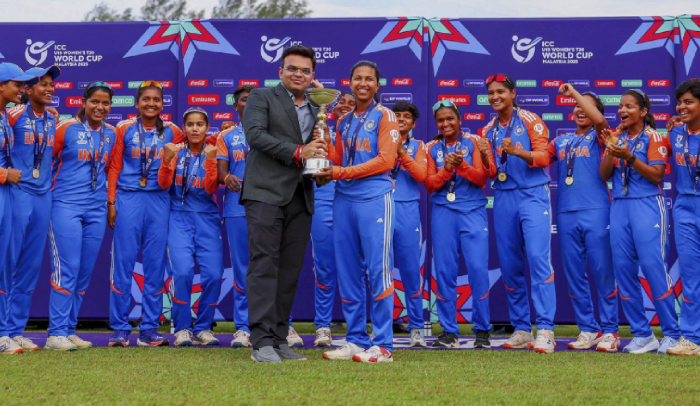
The India Women’s National Cricket Team Standings reflect a long and evolving journey of growth, struggle, and breakthrough moments in international cricket. From early inconsistency and limited exposure to becoming a strong contender in ICC tournaments, the team’s rise has been shaped by key performances, tactical improvements, and unforgettable rivalry matches. Players like Mithali Raj, Harmanpreet Kaur, Smriti Mandhana, and Jhulan Goswami have played defining roles in lifting India’s global reputation. Each ICC event added pressure, experience, and ranking shifts that gradually transformed India into a competitive force. This story is not just about standings, but about resilience, transformation, and belief on the world stage.
Overall Standings & Greatest Matches Summary
Format
Played
Won
Lost
Tied / NR
Current ICC Ranking
Peak Achievement / Glory
Test
42
8
7
27
No. 3
Historic consecutive home Test wins against England & Australia
ODI
345
188
150
7
No. 3
Champions
T20I
220
120
93
7
No. 3
Gold Medalists and Runners up
Recent Matches
Date
Tour / Series
Opponent
Format
Result / Outcome
June 2, 2026
Tour of England
England
T20I
Lost by 6 wickets
May 30, 2026
Tour of England
England
T20I
Lost by 26 runs
May 28, 2026
Tour of England
England
T20I
Won by 38 runs
Apr 27, 2026
Tour of South Africa
South Africa
T20I
Lost by 23 runs
Apr 25, 2026
Tour of South Africa
South Africa
T20I
Won by 14 runs
Mar 6-8, 2026
Tour of Australia
Australia
Test
Lost by 10 wickets at the WACA
Most Memorable Matches in History
Match Details
Significance
Key Performers
Why It Is Memorable
vs South Africa
Maiden World Cup Title
Smriti Mandhana, Harmanpreet Kaur
India lifted their first ever 50 over World Cup trophy on home soil, winning by 52 runs
vs Australia
Heavyweight Knockout
Jemimah Rodrigues, Deepti Sharma
India defeated the absolute favorites Australia by 5 wickets at DY Patil Stadium
vs Australia
The Game Changer
Harmanpreet Kaur
Harmanpreet legendary 171 single handedly dismantled Australia, catapulting women cricket into mainstream Indian media
vs Australia
Historic Test Domain
Sneh Rana, Pooja Vastrakar
India secured a historic first ever Test victory over the dominant Australian Women team
Player Analysis Table
Player Name & Role
Primary Strengths
Notable Stats
Analytical Impact & Role
Harmanpreet Kaur Captain / All rounder
Middle order power, captaincy experience, high pressure execution
T20I Avg 35.63, ODI Avg 40.50
The emotional and tactical anchor. Highest scoring captain in Women T20I history
Smriti Mandhana Vice Captain / Batter
Elite opening elegance, quick scoring power plays
ODI Avg 43.20, T20I Avg 33.64
The world class elegant anchor. Dictates the team overall batting momentum from ball one
Shafali Verma Opening Batter
Explosive strike rates, fearlessness against fast bowling
T20I Strike Rate 130, Innings 21
The designated aggressor. Tasked with exploiting field restrictions in early overs
Deepti Sharma All rounder
Off spin control, death overs utility, lower order recovery
Economy Rate under 6.50, regular breakthrough taker
The tactical backbone. Delivers crucial 4 over spells and anchors the tail end batting
Jemimah Rodrigues Batter
Spin manipulation, gap finding, rapid strike rotation
Recent Form: Match winning 188 run cushion catalyst in England
The middle over engine room. Keeps scoreboard ticking during tough middle over spells
Rise of India Women’s Cricket in ICC Standings Context
The early phase of India women’s cricket was defined by struggle, limited exposure, and inconsistent results in global tournaments. The India Women’s National Cricket Team Standings reflected a team still finding structure and identity. Wins were rare against top sides like Australia and England, but the foundation was being laid through individual brilliance from players like Mithali Raj and Jhulan Goswami. The team often depended on a few experienced performers rather than collective strength. Fielding errors and batting collapses were common under pressure. However, these early ICC appearances slowly built experience, and every close match added belief. The standings did not immediately reflect success, but they captured steady progress over time as India began learning how to compete at the highest level.
Score
Winning
Performance
Season
Other Info
Low win ratio
Few victories
Individual brilliance
2005 WC era
Building phase
Moderate losses
Occasional upsets
Inconsistent batting
2009 WC
Experience gained
Narrow defeats
Moral wins
Emerging bowlers
2013 WC
Team restructuring
Improving results
Competitive games
Balanced effort
2014-15
Ranking stability begins
First Breakthrough in World Cup and Ranking Shift
India’s first real breakthrough came when the team started defeating higher-ranked sides in ICC tournaments, marking a shift in the India Women’s National Cricket Team Standings. These wins were not just statistical improvements but psychological milestones. The batting lineup began showing more depth, while bowlers like Jhulan Goswami delivered match-winning spells under pressure. Close victories against strong teams changed global perception. The team moved from underdogs to genuine contenders. These performances helped India climb steadily in rankings and gain respect in world cricket. Fans also began to notice consistency replacing unpredictability. The breakthrough era set the stage for future success by proving that India could challenge and defeat top-ranked teams on the biggest stage.
Score
Winning
Performance
Season
Other Info
First wins vs top teams
Upset victories
Strong bowling impact
2005 WC
Confidence boost
Close matches won
Improved chase success
Middle-order stability
2009 WC
Ranking rise
Competitive totals
Balanced squad effort
Fielding improvement
2013 WC
Recognition grows
Semi-final push
Strong tournament run
Team coordination
2017 build-up
Global attention
The 2017 World Cup Turning Point Era
The 2017 World Cup became a defining moment in the India Women’s National Cricket Team Standings journey. India’s semi-final run changed everything. Harmanpreet Kaur’s unforgettable innings against Australia became a historic performance that reshaped global respect for Indian women’s cricket. The team displayed fearless batting, improved strike rates, and tactical maturity under pressure. Even in the final against England, India showed competitive intensity that surprised many experts. This tournament dramatically improved India’s ranking perception and fan following. Players gained confidence to perform consistently on the global stage. The 2017 campaign is often seen as the emotional and technical turning point where India transitioned into a top-tier women’s cricket nation.
Score
Winning
Performance
Season
Other Info
281 vs AUS semi
Historic win
Power hitting peak
2017 WC
Global spotlight
Multiple wins
Knockout qualification
Batting dominance
2017 WC
Ranking surge
Final appearance
Narrow loss
High-pressure play
2017 WC
Massive fan growth
Record performances
Star emergence
Harmanpreet peak
2017
Legacy moment
T20 World Cup Evolution and Tactical Growth
India’s growth in T20 World Cups marked a shift toward modern, aggressive cricket that directly influenced the India Women’s National Cricket Team Standings. Earlier inconsistencies in strike rate and finishing ability were gradually corrected with better preparation and tactical clarity. Smriti Mandhana and Harmanpreet Kaur became central figures in building aggressive starts and finishing innings strongly. Bowlers adapted with variations like slower balls and tighter death bowling. India began competing more consistently in knockout qualification scenarios. However, pressure games still exposed middle-order weaknesses. Despite this, the overall trajectory was upward, with India becoming a stable semi-final contender in multiple editions, showing tactical maturity and improved adaptability to global T20 demands.
Score
Winning
Performance
Season
Other Info
Strong group wins
Semi-final runs
Aggressive batting
2018 WT20
Tactical shift
Competitive totals
Mixed results
Bowling variations
2020 WT20
Close losses
Improved SR
Consistent wins
Powerplay dominance
2023 WT20
Ranking stability
Knockout pushes
Near-final finishes
Balanced squad
Recent era
Growth phase
Moments and Turning Points in ICC Events
Rivalries against Australia, England, and South Africa have played a massive role in shaping the India Women’s National Cricket Team Standings. Australia remains the toughest challenge, often exposing India’s weaknesses in pressure situations. England matches have delivered iconic close finishes, including heartbreaks and breakthroughs. South Africa contests have been crucial in determining qualification scenarios in ICC events. These rivalry matches are not just about wins and losses but about mental toughness and adaptability. India’s ability to compete closely with top-ranked teams has steadily improved rankings over time. Each rivalry encounter has added intensity to India’s global cricket identity, turning standings into a reflection of competitive spirit rather than just numbers.
Score
Winning
Performance
Season
Other Info
Close vs AUS
Few wins
High pressure games
2017-2022
Learning curve
Wins vs ENG
Key upsets
Tactical discipline
2014-2023
Ranking impact
SA qualifiers
Crucial wins
Balanced play
2018-2024
Tournament deciders
Mixed results
Rising competitiveness
Mental strength
Ongoing
Rivalry growth
Conclusion
The India Women’s National Cricket Team Standings journey highlights how consistent effort, iconic performances, and learning from high-pressure moments can reshape a team’s global identity. India’s rise from an unpredictable side to a stable contender in ICC events shows the importance of long-term development and mental strength. Rivalries against top teams pushed India to improve strategies, fitness, and execution in crucial matches. While challenges still exist in consistency and knockout performances, the overall trajectory remains upward. Today, India stands as one of the most competitive sides in women’s cricket, and its standings reflect a story of persistence, evolution, and growing dominance in world cricket.